

Student Stories


Master of Business Administration
Learn leadership, strategy and management skills with UFred’s fully online MBA program designed for working professionals.
Your flexible online MBA
Earn your online MBA from the University of Fredericton while you continue working full-time. Expand your network and gain business skills to succeed. Many people have already benefited from our life-changing education. Are you next?
95%
Student satisfaction rate
100%
Online program
11
Specialty streams
25
Person class size maximum
95%
Student satisfaction rate
100%
Online program
11
Specialty streams
25
Person class size maximum
Program overview
Our MBA is a flexible graduate-level business degree that helps you build business acumen while you balance work.
Relevant skills for a changing world
Modern technology like AI is integrated into the MBA curriculum to keep your learning relevant. You'll learn fresh solutions and sharpen your critical thinking as you apply concepts immediately to your work.
Connections felt beyond the screen
Our courses are intentionally kept small to promote a close-knit community. You'll participate in group work. Faculty members know your name. You'll never feel like just a number.
Expand your professional network
Your classmates include international students from all over the country and beyond. Different industries. Different roles. Different insights. You never know who you'll meet and what door that could open.
Skip the thesis, show us what you've got
Apply your project management and critical thinking skills to a real-world capstone project. Choose to continue fully online or travel internationally to gain a global business perspective.

Duration
2 - 3.5 years
Expect 15-20 hours/week, per course.
Tuition
$27,033
Cost by course:
4 credits: $1,864.32
6 credits: $2,796.49
Courses
14
Find your favourite course at UFred. Each one is designed to translate seamlessly from your virtual classroom to your career, inspiring leadership growth as you study.
Start datesUpcoming program entries
Nov. 30, Jan. 11, March 29
Apply at least 4 weeks before your chosen start date.
Next application deadline:
Oct. 30
What to expect when earning your MBA online at UFred
From your first course to your final project, you’ll get the skills and connections you need to advance your career and make an impact in the world.

Build your foundation
Learn from the ground up
You'll begin your studies by completing a series of foundational courses that cover key business and leadership topics.

Choose your specialty stream
Find your focus
After your foundational courses, you’ll choose one of 11 specialty streams that best aligns with your interests and goals.
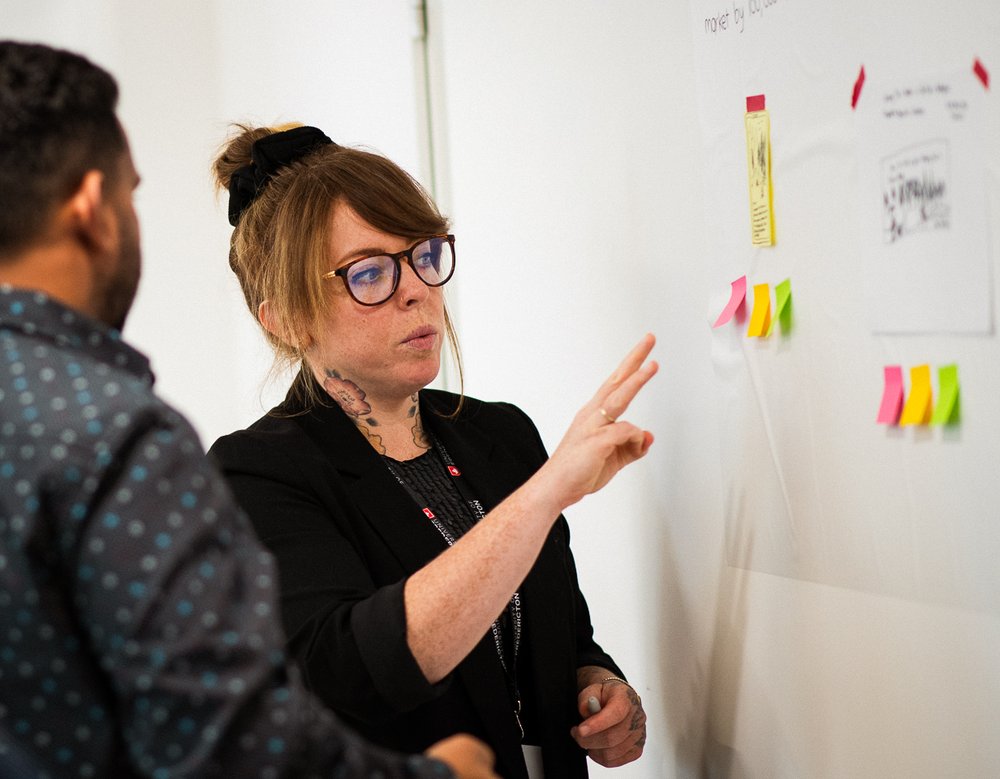
Complete your capstone project
Put your education to work
Dive into business strategy, performance leadership and management with a capstone project. Optional international travel.
Course descriptions
Explore each of our courses to see how real-world lessons and hands-on projects come together to transform your learning into career-ready skills.
Foundational courses
This course gives students the foundational knowledge they need to critically assess leadership concepts and their utility. Students survey the leadership theories of key thinkers and practitioners in the field, learning about the empirical, theoretical and pragmatic strengths and limitations of each approach. Through case studies and exercises, students develop an understanding of organizational leadership. They will also learn a comprehensive set of leadership practices that will have immediate value for application at work.
View full course details
Credits: 4
This course offers a comprehensive, graduate level exploration of managerial accounting. The course utilizes case studies and audit reports to focus on the use of appropriate accounting systems and the application of accounting data in the management of an organization. In conjunction, what accounting data are interesting or relevant-to-task, and how such data might be used is dependent upon what the manager is seeking to accomplish and what other information may or may not be available.
View full course details
Credits: 4
All managers are required to possess a basic understanding of financial concepts. This course explores the principal role of finance via its concepts, calculative applications, and capital market analyses. In addition, the basic concepts of the time-value of money, rates of return, and valuation are covered. Students will learn how capital markets function, what different securities exist, and how to manage cash flow. Credit, risk, working capital, and analysis of financial statements receive particular attention. Cases are used throughout the course to provide students with hands-on experience in the use of financial tools. Unlike other finance courses, this consists of half concept and half mathematics. Besides providing basic math skills, this course should provide students with an excellent introduction to financial management concepts.
View full course details
Credits: 4
Systematic understanding of the internal and external economic environments of an organization, and the ability to analyze them as a basis for sound decisions, are core pre-requisites of sound leadership. This course reviews basic macro and micro-economic concepts (e.g. supply and demand, elasticity, production function, competitive environments, pricing, etc.) and illustrates their impact on decision making and strategy formulation. Students will learn how to think through economic challenges and opportunities presented to their organization.
View full course details
Credits: 4
Leading and managing organizations requires knowing something about changing them. This course will assist the learner in understanding the drivers of successful organizational change and development; clarify the components of an effective and healthy organization – the meta-goal for any change effort; and understand the skills to successfully design, launch, nurture, and lead change.
View full course details
Credits: 4
As you move higher in your organization, leaders are being asked to think beyond their own function. They are being asked to consider the implications of their analysis and decisions beyond their function to that of other functions and even the entire enterprise with all its stakeholders. This, coupled with the increasingly complex global environment, leaders need to think more holistically, using concepts of systems thinking, design thinking and performance excellence. The learned ability to comprehensively analyze leadership, strategy, operations, and performance will prove invaluable to organizations’ leaders. This course, Systems Thinking and Organizational Design, gives us the knowledge and skills to understand the interrelationship and impact of decisions across the organization.
View full course details
Credits: 4
This course focuses on the strategic marketing planning process from the perspective of two key roles in the organization, i.e., the Chief Marketing Officer (CMO) and the Brand (or Product) Manager. Leaning heavily on external and internal analyses and the CEO’s strategic guidance, we examine how these managers refine the company’s long-term go-to-market strategy, at both the corporate level and the product level. We also briefly examine which leading edge digital applications are most useful with respect to intelligence gathering, analysis, decision-making and/or implementation.
View full course details
Credits: 4
This course focuses on the operational planning process from the perspective of the Chief Operating Officer (COO). Leaning heavily on external and internal analyses and the CEO’s strategic guidance, we examine how the COO develops the company’s long-term operations strategy, comprising decisions about supply-chain logistics, production, customer service, quality assurance (QA), distribution and field support. We also briefly examine which leading edge digital applications are most useful with respect to intelligence gathering, analysis, decision-making and/or implementation.
View full course details
Credits: 4
The rate of change in today’s global context is accelerating. Personnel have to be world-ready, and organizations have to be change-ready. This course examines the human resource recruiting and development function and the organizational design function within a global and organizational lifecycle perspective, emphasizing how personnel and designs must change as projects and divisions evolve. This dynamic approach to organizational development prepares students to diagnose mismatches between existing personnel and designs versus changing demands, and to develop personnel and designs to accommodate new realities.
View full course details
Credits: 4
In today’s 24/7 global operating environment, the possession of sufficient and correct information about the relevant external and internal environments, obtained and circulated to the right decision-makers in a timely fashion, can spell the difference between success and failure. This course introduces the main concepts of management information systems (MIS), examines how the design of MIS can affect the performance of an organization, and explores the process of information systems planning from the perspective of the CIO.
View full course details
Credits: 4
Specialty streams
In this course, the participants will learn to describe and explain the fundamental concepts in AI (e.g., machine learning, deep learning, neural network, etc.) and the role AI plays in business functioning and decision-making – both in the short and long terms. Then, using actual case studies, examples, and applications of AI, the participants will work on identifying business opportunities where AI could be applied. Finally, they will learn the systematic framework and structured approaches for developing, designing, and implementing AI projects to solve specific business problems. The course will also focus on various conflicts, ethical, hiring and skills, and other leadership challenges organizations face when applying AI in business decisionmaking. The case studies and examples discussed in the course will cover a wide range of industries – customer service, retail, financial services, healthcare, energy, and security. The course does not require a prior programming, engineering, or advanced statistics and mathematics background.
View full course details
Credits: 4
The objective of this course is to introduce students to three fundamental areas of AI development for business applications. With a focus on developing scalable AI products, the course explores how leaders can effectively deploy robust server infrastructure, data pipelines, and front/backend applications. AI applications rely primarily on bottom-down programming methodologies to truly render models that learn over time with supervised or unsupervised models. These models are then pegged to an accuracy score, ensuring reliability and trust. However, as industry standards move towards Explainable AI (x AI) frameworks, leaders must understand the course’s three fundamental areas.
View full course details
Credits: 4
This course is designed to assist leaders with strategically planning their organization’s growth and efficiency through AI. Whether an organization is developing AI products or integrating third-party AI applications into their operations, leaders must adhere to a set of standards. With the recent legislative discussions around the Artificial Intelligence and Data Act, there is increasing attention on governance and controls around AI. This course introduces leaders to the key standards in this field of knowledge and adopts a series of playbooks to support them in their strategic planning.
View full course details
Credits: 4
This course is the first of the Business Analytics sequence for the EMBA Analytics stream. The design of this course is to familiarize students with the analytics world: concepts and process. It is a conceptual course. There is no mathematical content included in this course. The content revolves around the understanding of what analytics is and how it can be a means to develop an organization’s intelligence, develop solutions and improve competitiveness.
View full course details
Credits: 4
This is the second course in the EMBA/MBA Business Analytics stream. The design of this course is to familiarize students with the concepts and processes of analytics and the advanced techniques and tools to support decision-making processes (including Regression Analysis, Forecasting Techniques, Simulation and Risk Analysis) as well as introducing the subject of Data Mining.
View full course details
Credits: 4
In this course, students will be involved in the understanding of technology, types of solutions, and attributes of Big Data. All of these aspects will be positioned around business objectives, the impact potential of Analytics work, identification, and description of analytics opportunities for matching problems with solutions. It will be important to learn how to differentiate what is possible (or not possible) with Big Data.
View full course details
Credits: 4
This course explores the various roles, ethical practices of consulting, and the consulting process. The client relationship is critical to being a successful consultant. While knowledge, skills, and abilities are essential, so is the ability to develop a trust relationship while adding value to the client’s business. These attributes will be discussed within the context of the consultant’s role within an organization.
View full course details
Credits: 4
This course is the second in the Consulting Leadership stream. It provides students with the opportunity to continue to apply the consulting cycle to the Hospital Services of the Americas case study. Students will be required to continue to analyze and diagnose any potential issues or concerns, develop a contract or proposal with the proper pricing structure, evaluate the methods for gathering data, and provide feedback in the form of a formal presentation. This course will prepare students for the third course in which they will be applying this consulting cycle to a real/actual client business or organization.
View full course details
Credits: 4
This is the third course in the Consulting Leadership stream. During this course, students will be completing a consulting project with an outside organization of their choosing. Alternatively, students may elect to conduct a consulting project as an international consultant. Students will utilize the tools and processes learned in the previous two courses within this stream. The culmination of this project will be a presentation of findings to the class. Also, students will be exploring aspects of management consulting through different contexts related to their professional interests.
View full course details
Credits: 4
This course provides students with foundational knowledge and skills in modelling techniques and covers topics such as forecasting cash flows and projecting revenues, expenses, and financial health. Financial modelling helps business leaders make informed decisions and plans about business goals and projects, whether planning for current operations or for capital projects and business growth. Leaders of startups, established global enterprises, or nonprofit organizations benefit from understanding how financial modelling enhances knowledge about the potential impact of business decisions on revenue and expense streams, cash flow, and profitability. Students will explore additional topics, such as using scenarios, sensitivity, and other tools to better understand the financial situation and risks facing business organizations. The course will assist decision-makers in preparing and managing business projects and actions through practical applications such as case analyses and team projects.
View full course details
Credits: 4
International Finance explores the financial issues and challenges that arise in a global business environment. The course covers topics such as exchange rate risk management, international investment strategies, multinational capital budgeting, global capital markets, and the impact of international financial institutions. Emphasis is placed on practical applications and real-world case studies to develop students’ analytical and decision-making skills in managing financial operations across borders. Students will gain practical experience through case studies and/or team projects.
View full course details
Credits: 4
Students will explore the rapidly evolving landscape of financial technology and its impact on traditional financial services. The course covers key topics such as innovations in banking, insurance, investment, and payment systems driven by technological advancements. The course also covers blockchain and cryptocurrencies, robo-advisors, peer-to-peer lending, crowdfunding, algorithmic trading, and regulatory challenges associated with fintech. Through case studies and/or team projects, students will gain insights into the disruptive potential of fintech and its implications for the future of finance, preparing them to adapt and thrive in this rapidly changing industry.
View full course details
Credits: 4
This contemporary study topic lends a fundamental level of understanding the challenges and developing the strategy skills that are important for business leaders and managers facing the pressures to meet higher accountability levels of social and environmental responsibilities in their operational policies and practices.
View full course details
Credits: 4
In this course, students will use cases, lectures and assignments to identify and understand the operating and competitive environment of the organization, use this information to define the organization’s strategy and market positioning, and implement the strategy by moulding and organizing its resources, its competitive ability, and its operating efficiency. We’ll also examine managing relationships within global organizations and their alliance partners to implement strategy, moulding the terms of competition to favour an organization, and form profitable relationships with customers.
View full course details
Credits: 4
Managerial roles and responsibilities are becoming increasingly global. In many companies, managing in an international environment has become an important criterion (if not the most important criterion) for promoting top management levels and concomitant business success in the corporate world. This course begins with an orientation on global management and ends focusing on unique considerations that today’s global managers need to consider. In between, the course will focus on critical conditional topics like the understanding of cultural differences, cross-cultural ethics, business communication in a global context, skills for avoidance/dealing with conflict, and personnel negotiations; topics relevant to the critical subject of “global collaborative teams.”
View full course details
Credits: 4
A business case attempts to answer the question, “Why should my organization invest the proposed resources (both time and money) to implement the proposed action or set of actions?” The answer typically incorporates the alignment with the organization’s strategic direction and goals, resource availability, affordability, financial value (i.e., profitability), social value, and acceptability of risk. This course attempts to identify which systemic approaches deliver the most significant economic and social value while maximizing alignment with organizational goals, resource availability, and risk appetite. To wrap up, students will review Communication Strategies for presenting the business case to the Board of Directors/Executive Management to maximize the probability of approval.
View full course details
Credits: 4
This course begins with a review of the fundamental concepts in risk analysis and management. Then through the examination of various case studies, the course analyzes the structures and processes involved in Enterprise Risk Management. A variety of key performance indicators, including leading and lagging indicators, will be explored and linked to organizational strategy development. Also, how the entire organization’s risk management efforts can contribute to creating and protecting its financial and social value will be studied.
View full course details
Credits: 4
This course highlights the importance of effective communication in the workplace. Beginning with a review of the ‘communication process,’ the course will offer students an opportunity to ‘self assess’ and review work from leading authors on this topic. The material includes a brief review of management models, leadership styles, and highlights the critical relationship between workers and supervisors. It will review how shared perceptions of value are determined and grown. Finally, the course will teach students to apply strategies that increase ownership of occupational health and safety management systems by management and workers alike, which leads to enhanced loyalty and more significant profit.
View full course details
Credits: 4
Compensation is a powerful tool for motivating, attracting, and retaining high-calibre employees necessary to drive organizational success. The course’s focus is on aligning compensation systems to motivate, attract, and retain the type of employees required to drive strategic initiatives. For many organizations, compensation is a significant expense, and this course explores opportunities for cost efficiencies. Students will examine details necessary to consider when designing compensation systems and possible weight factors depending on organizational goals and constraints. Students will develop the tools to evaluate compensation systems and create appropriate, cost-effective systems that support corporate strategies.
View full course details
Credits: 4
In today’s competitive environment, intellectual capital is critical for organizational success, and training is the key to developing the intellectual capabilities needed to drive an organization’s strategy. There are, however, a bewildering array of training options open to organizations. This course focuses on helping students assess their organizations’ training needs, develop appropriate training programs, and evaluate and update those programs as needed. The ultimate goal is to create the intellectual capital needed to move organizations forward.
View full course details
Credits: 4
In our rapidly changing business environment, it is more critical than ever to hire and evaluate employees’ performance. Selection and performance management are two related issues. Selection is concerned with hiring the best employees for the job, while performance management deals with evaluating employee performance. There is good science behind the selection and evaluation of employees. This course will provide students with the appropriate tools to design good selection systems and create reliable performance management systems. Well-designed selection and performance management systems are critical to the 4 strategic success of organizations.
View full course details
Credits: 4
This course takes a broad view of the term product, including tangible goods, intangible services, organizational processes, and more. It is a comprehensive course that explores the creation of new products and enhancing existing products for external or internal customers.
Students will learn the truth of the myths associated with innovation; that innovation is not about being especially creative, lucky or a genius. Instead, innovation is a process, and students will be equipped as an innovator as they learn that process. This course will deepen students’ understanding of innovation, and will explore the skills they already have, such as assessing value in everyday purchases, which will help to equip them for the innovation process.
View full course details
Credits: 4
Innovating is not simple; it is fundamentally different than executing (the usual day-to-day management focus). As companies grow, they may focus on their executing skills, and thus forgo innovation. This is because innovation involves higher levels of uncertainty and risk than they may feel is acceptable for daily operations. Without a concentrated effort on fostering innovation capabilities, organizations can fall behind and fail.
A wide variety of practices are unique to innovation, requiring a different strategy, organizational culture, structure, and process. This course will teach you the proven ways to lead and manage innovation in organizations.
View full course details
Credits: 4
Students will learn to navigate both optimizing and exploration within a business, the latter of which can often be overlooked for the former, resulting in slow growth or even decline. This course equips students with the tools needed for creating and managing a two-part portfolio system developed for both exploration and optimization.
The successes and failures of entrepreneurs who attempted to scale their business will be examined and studied. Their experiences speak to the mindset that is needed for scaling and the decisions they faced avoiding disaster and growing their businesses.
View full course details
Credits: 4
This course examines current and emerging trends, technologies, and best practices in the evolving digital landscape. Marketing within organizations has undergone a significant shift from traditional marketing methods to an increasingly digital focus. The Internet and mobile technologies have made way for new marketing channels, and today’s marketers must be familiar with evolving digital landscapes to maintain a competitive stance, build and manage customer relationships, and be relevant to current and future customers. This course will explore the use of online marketing strategies, will analyze international marketing concepts, examine the opportunities and challenges associated with marketing across borders, and review the necessary elements in international marketing planning. Additionally, students will investigate the strategic issues that marketing management must consider as they support expanded global operations.
View full course details
Credits: 4
International Marketing is increasingly important as the world becomes globalized. One of the most common growth paths for a brand is expanding to new geographic markets. International Marketing involves businesses marketing product lines outside the originating market. This course will focus on the most critical decisions in international marketing and the criteria, knowledge, and research needed to make effective decisions within global operations. Students will analyze international marketing concepts, examine the opportunities and challenges associated with marketing across borders, and review the necessary elements in international marketing planning. Additionally, students will investigate the strategic issues that marketing management must consider as they support expanded global operations.
View full course details
Credits: 4
New digital marketing tools and strategies are continuously emerging based on regular data collection efforts about products, organizations, and consumer behaviour. Current digital tools are shared infrastructure of IT-enabled platforms and are major influencers in the current digital age. Digital Analytics is a Graduate course that will provide you with the foundation and working knowledge of digital analytics strategies and tactics. The course covers some of the important tools and techniques in marketing analytics with a focus on digital marketing applications. Within this course, students will learn about digital analytics tools, data gathering methods, data insight development, and how to communicate data-driven information to key stakeholders of the organization. The course will investigate digital analytics for websites, apps, social media, and other digital marketing channels.
View full course details
Credits: 4
Sales and selling have changed over the past 20 years. Social media and technology have changed buyer expectations. Buyers are more knowledgeable about products/services and only a click away from product reviews. Sales professionals are entering the sales cycle with prospects who are further along in their buying decisions. Sales professionals must adapt to the changing business environment. This course will introduce the various consultative selling approaches that sales teams deploy in multiple scenarios.
View full course details
Credits: 4
In this course students will learn to identify the critical buying influences in a sale, how to minimize any uncertainties about a customer’s receptivity, how to avoid internal sabotage, and how to leverage your strengths to maximize their competitive advantage. Upon completion of the course they will be able to bring to complex sales a clearly defined and reliable process for success that considers all the elements of the impending transaction. Leading a sales team as a participant or manager necessitates these skills.
View full course details
Credits: 4
This course will explore at the role of technologies used in sales systems and the important decisions sales leaders must undertake when deploying these technologies with their sales force. Lead generation technologies will be examined as well as content management systems. CRM, pipeline management systems and the role of social media will be assessed through case studies and in class discussions. New technologies will be explored and assessed to determine their future importance in sales force design.
View full course details
Credits: 4
This course introduces the foundational characteristics of the social enterprise, beginning with the core concept of “blended value”, which comprises both financial value and social value.
Followed by a detailed examination of: a range of evolving legal frameworks and performance measures; financial and social value forecasting; and important analytic decision-aiding concepts used for feasibility assessment and strategic business planning.
This course concludes with discussion of appropriate organizational structures, and how to effectively manage internal cultural change and internal and external stakeholder communications.
View full course details
Credits: 4
Participants who complete this course will be able to demonstrate and apply their knowledge of existing and emerging social finance and impact investment tools across various organizational legal structures, and will understand the enormous opportunities and challenges they present to the blended or shared value enterprise development process.
View full course details
Credits: 4
Social enterprise operates in a complex environment where social values and commercial activity blend. By their nature, they challenge the traditional policy boundaries of the for-profit and non-profit sectors. This course explores and analyzes the implications of the current and evolving policy environment on developing a flourishing social enterprise sector.
View full course details
Credits: 4
Capstones
In the Enterprise Integration Capstone Project, you’ll team up with classmates to partner with senior executives from a real business or organization.
Dive deep into leadership, strategy, business operations and performance leadership. You’ll take everything you’ve learned to analyze the business, uncover opportunities and deliver clear, actionable recommendations. Everything wraps up with a professional report and presentation to the organization’s senior leadership.
View full course details
Credits: 6
This entrepreneur-focused capstone lets you apply what you’ve learned in your core courses to launch an exciting, new venture. It might be a startup, social enterprise, new business unit or major corporate innovation project. The choice is yours.
Working in teams, you’ll follow a proven process from opportunity to launch plan. Sharpen your marketing, finance and management skills while testing your ideas with real data. Each week, you’ll build a detailed venture plan, getting feedback from instructors, peers, and potential customers. This hands-on experience will prepare you to become a confident entrepreneur or corporate innovator.
View full course details
Credits: 6
The Global Capstone Project is perfect for students interested in taking an entrepreneurship approach to product development and global marketing.
You’ll build a business division, choose a product and create a plan to bring it to international markets. Along the way, master global business strategies, different markets and leadership. Your final deliverable? A complete global business plan with funding recommendations — ready to make an impact worldwide.
View full course details
Credits: 6
The Global Capstone with International Field Study option combines business strategy with international travel. You’ll apply everything you’ve learned throughout your degree to tackle real global challenges and build a comprehensive business plan to launch a product/service on the world stage.
Here’s the best part: you’ll spend five days abroad meeting global leaders, attending seminars and gaining firsthand insight into international markets. It’s a unique chance to see the global economy in action — and be part of it.
View full course details
Credits: 6
Explore your MBA options
Choose from 11 specialty streams to create a learning journey that matches your professional interests.
The MBA program for real lives and real impact
Industry-informed learning
Guided by our Professional Advisory Council, our online courses reflect the latest industry and management trends for practical knowledge you can apply right away.
Real-time interactions
Each course includes one live online class per week, held in the evening between Monday and Thursday (no earlier than 6:30 p.m. EST) for 1-2 hours.
Flexible coursework
Coursework is faculty-led with deadlines for structure, but you will have flexibility as to when you complete your studies during that time.
Learn from the very best
Our faculty members have strong academic and professional credentials along with extensive experience teaching in an online environment.

Recognized as a leader in online education






“
The connections I developed through the program have been amazing and will remain indefinitely.
Laura Fleming | MBA Graduate
“
I have no doubt the skills and knowledge I have gained through my MBA will lead to remarkable things in the future.
Jeffrey Underhill | MBA Graduate
“
The highlight has most definitely been engaging with folks from all over the globe.
Sandra Holmberg | MBA Graduate
“The connections I developed through the program have been amazing and will remain indefinitely.
Laura Fleming | MBA Graduate
“I have no doubt the skills and knowledge I have gained through my MBA will lead to remarkable things in the future.
Jeffrey Underhill | MBA Graduate
“The highlight has most definitely been engaging with folks from all over the globe.
Sandra Holmberg | MBA Graduate
Start your journey with UFred
We make it simple to take the next step in your education. Our Program Advisors are happy to help you apply. Begin whenever works best for you.
FAQs
Have questions? Feel free to ask us! You can also read what other people are asking about the UFred MBA.
Learn about UFred retention, attrition and graduation rates.
News and featured stories

News
Dr. Amna Khaliq appointed Program Chair, Business—bringing global insight and academic leadership.
Read more >
News
UFred featured in Maclean’s 2025 MBA Guide for flexible, accredited online MBA programs.
Read more >
Knowledge Hub
UFred’s MBA offers ROI – lower tuition, strong salary growth and long-term career benefits.
Read more >Request program info
Learn more about UFred
Need some help? We’re here for you.
Our friendly, knowledgeable Program Advisors genuinely care about you and your future. We’d love to chat so we can help you find the education journey that’s right for you.